How to Build Muscle After 60 AND Boost Your Brain Power (Science-Backed Guide)
How to Build Muscle After 60 AND Boost Your Brain Power (Science-Backed Guide)
How to Build Muscle After 60 AND Boost Your Brain Power (Science-Backed Guide)
I'm 83 years old, and people tell me I look and fact like I'm a healthy 60. That's not luck, genetics, or some magic pill. It's functional fitness: and it's not just keeping my body strong. It's keeping my mind sharp, too.
Here's what most people don't realize: when you build muscle after 60, you're also building brain power. The same strength training that helps you climb stairs, carry groceries, and move with confidence is also protecting your memory, focus, and mental clarity.
You don't have to accept decline. You can reverse it. And I'm going to show you exactly how.
The Muscle-Brain Connection You Need to Know
Let's get one thing straight: your muscles and your brain are in constant communication. When you perform strength training exercises, your muscles release proteins called myokines that travel through your bloodstream straight to your brain. These proteins stimulate the growth of new brain cells, improve memory formation, and protect against cognitive decline.
Translation? Every time you do a squat, a push-up, or lift a weight, you're literally feeding your brain.
Research shows that strength training improves executive function: that's your ability to plan, focus, and make decisions. It enhances processing speed, which means you think faster and react quicker. And it boosts neuroplasticity, your brain's ability to adapt and learn new things.
This isn't theory. This is science-backed fact. And at 83, I'm living proof that it works.
Here's what most people don't realize: when you build muscle after 60, you're also building brain power. The same strength training that helps you climb stairs, carry groceries, and move with confidence is also protecting your memory, focus, and mental clarity.
You don't have to accept decline. You can reverse it. And I'm going to show you exactly how.
The Muscle-Brain Connection You Need to Know
Let's get one thing straight: your muscles and your brain are in constant communication. When you perform strength training exercises, your muscles release proteins called myokines that travel through your bloodstream straight to your brain. These proteins stimulate the growth of new brain cells, improve memory formation, and protect against cognitive decline.
Translation? Every time you do a squat, a push-up, or lift a weight, you're literally feeding your brain.
Research shows that strength training improves executive function: that's your ability to plan, focus, and make decisions. It enhances processing speed, which means you think faster and react quicker. And it boosts neuroplasticity, your brain's ability to adapt and learn new things.
This isn't theory. This is science-backed fact. And at 83, I'm living proof that it works.
Why Strength Training After 60 Is Non-Negotiable
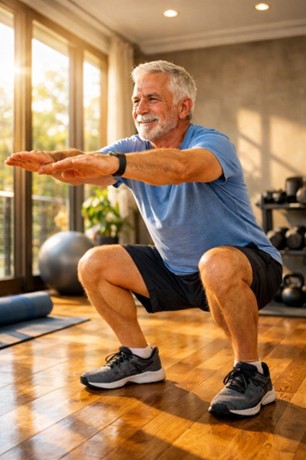
Most people over 60 have been told to "take it easy" or "be careful." That advice is stealing your independence.
Here's what actually happens when you avoid strength training:
• You lose 3-5% of your muscle mass every decade after 30
• Your bones become weaker and more prone to fractures
• Your balance deteriorates, increasing fall risk
• Your metabolism slows down, making weight management harder
• Your cognitive function declines faster
But here's the exciting part: You can reverse all of this with the right approach to strength training for seniors. It doesn't matter if you haven't exercised in years. Your body is ready to respond: right now, today.
Here's what actually happens when you avoid strength training:
• You lose 3-5% of your muscle mass every decade after 30
• Your bones become weaker and more prone to fractures
• Your balance deteriorates, increasing fall risk
• Your metabolism slows down, making weight management harder
• Your cognitive function declines faster
But here's the exciting part: You can reverse all of this with the right approach to strength training for seniors. It doesn't matter if you haven't exercised in years. Your body is ready to respond: right now, today.
The Functional Fitness Formula: Build Muscle, Boost Brain Power
Forget the complicated gym routines and fancy machines. How to build muscle after 60 comes down to functional movements: exercises that mirror real-life activities and train multiple muscle groups at once.
This approach doesn't just build strength. It builds the kind of strength you can actually use in daily life. And that's what keeps you independent, confident, and sharp.
The Core Exercises That Change Everything
Chair Squats (or Air Squats)
This is the foundation. Every time you stand up from a chair, get off the toilet, or climb out of a car, you're doing a squat pattern. Training this movement keeps you independent.
Start with 10 slow, controlled repetitions. If you need support, use a chair: sit down completely, then stand up using your leg strength (not momentum). As you get stronger, you'll do these without touching the chair at all.
Wall Push-Ups
Upper body strength isn't optional. You need it to push yourself up from bed, open heavy doors, and catch yourself if you stumble.
Stand arm's length from a wall with your hands at shoulder height. Bend your elbows to bring your chest toward the wall, then push back. Do 10 repetitions. This engages your chest, shoulders, arms, and core.
Forget the complicated gym routines and fancy machines. How to build muscle after 60 comes down to functional movements: exercises that mirror real-life activities and train multiple muscle groups at once.
This approach doesn't just build strength. It builds the kind of strength you can actually use in daily life. And that's what keeps you independent, confident, and sharp.
The Core Exercises That Change Everything
Chair Squats (or Air Squats)
This is the foundation. Every time you stand up from a chair, get off the toilet, or climb out of a car, you're doing a squat pattern. Training this movement keeps you independent.
Start with 10 slow, controlled repetitions. If you need support, use a chair: sit down completely, then stand up using your leg strength (not momentum). As you get stronger, you'll do these without touching the chair at all.
Wall Push-Ups
Upper body strength isn't optional. You need it to push yourself up from bed, open heavy doors, and catch yourself if you stumble.
Stand arm's length from a wall with your hands at shoulder height. Bend your elbows to bring your chest toward the wall, then push back. Do 10 repetitions. This engages your chest, shoulders, arms, and core.

Reverse Lunges
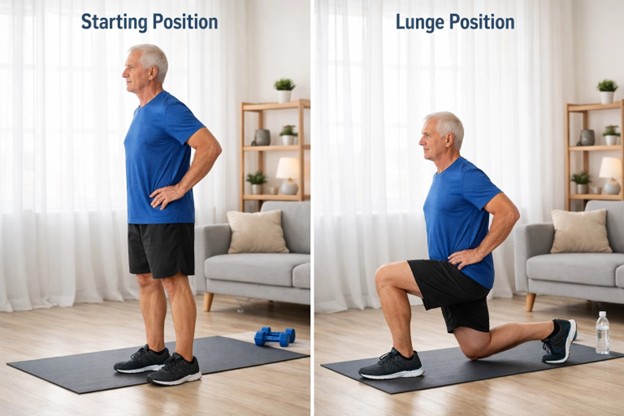
Balance and leg strength in one movement. Step one foot back, bend both knees to 90 degrees, then push through your front heel to return to standing. This builds your glutes, hamstrings, and quads while improving coordination.
Do 5 repetitions per leg. Hold onto a wall or counter if needed: there's no shame in safety.
Overhead Press
Grab light weights (or water bottles if you're just starting). Raise them to shoulder height, then press overhead. This movement builds shoulder strength for reaching high shelves and lifting objects above your head.
Start with 10 repetitions. You'll feel this in your shoulders, core, and even your legs as they stabilize you.
Balance and leg strength in one movement. Step one foot back, bend both knees to 90 degrees, then push through your front heel to return to standing. This builds your glutes, hamstrings, and quads while improving coordination.
Do 5 repetitions per leg. Hold onto a wall or counter if needed: there's no shame in safety.
Overhead Press
Grab light weights (or water bottles if you're just starting). Raise them to shoulder height, then press overhead. This movement builds shoulder strength for reaching high shelves and lifting objects above your head.
Start with 10 repetitions. You'll feel this in your shoulders, core, and even your legs as they stabilize you.
Calf Raises
Stand with feet hip-width apart and lift your heels off the ground. Hold a wall or chair for support. This simple exercise strengthens your calves and improves ankle stability: critical for preventing falls.
Do 10-15 repetitions. Feel the burn? That's your body getting stronger.
Your Simple Training Structure
Perform 10 repetitions of each exercise (or 5 per leg for lunges). Rest 30 seconds between exercises. Complete the entire circuit 2-3 times.
That's it. Five exercises. 10-15 minutes total.
Do this routine 3-4 times per week, and you'll see measurable improvements in 30 days. Better strength, better balance, sharper mind.
Stand with feet hip-width apart and lift your heels off the ground. Hold a wall or chair for support. This simple exercise strengthens your calves and improves ankle stability: critical for preventing falls.
Do 10-15 repetitions. Feel the burn? That's your body getting stronger.
Your Simple Training Structure
Perform 10 repetitions of each exercise (or 5 per leg for lunges). Rest 30 seconds between exercises. Complete the entire circuit 2-3 times.
That's it. Five exercises. 10-15 minutes total.
Do this routine 3-4 times per week, and you'll see measurable improvements in 30 days. Better strength, better balance, sharper mind.
The Cognitive Benefits You'll Actually Feel
Let's talk about what happens to your brain when you commit to strength training for seniors:
Improved Memory
You'll remember names easier. You'll recall where you put your keys. You'll retain information from conversations without struggling. That's the increased blood flow to your brain at work: delivering oxygen and nutrients that support memory formation.
Faster Processing Speed
Your reaction time improves. You make decisions quicker. You feel more mentally agile. This is your brain building new neural pathways and strengthening existing ones.
Improved Memory
You'll remember names easier. You'll recall where you put your keys. You'll retain information from conversations without struggling. That's the increased blood flow to your brain at work: delivering oxygen and nutrients that support memory formation.
Faster Processing Speed
Your reaction time improves. You make decisions quicker. You feel more mentally agile. This is your brain building new neural pathways and strengthening existing ones.
Better Mood and Energy
Strength training releases endorphins: your brain's natural mood boosters. You'll feel more optimistic, more energized, and more capable of handling stress. Depression and anxiety decrease. Confidence increases.
Enhanced Focus and Concentration
You'll find it easier to stay on task, complete projects, and engage in activities that require sustained attention. Your executive function: the part of your brain that manages planning and decision-making: gets stronger with every workout.
Protection Against Dementia
This is the big one. Regular strength training reduces your risk of cognitive decline and dementia by up to 50%. You're literally building a protective shield around your brain health.
The Ageless Living Approach: Real-World Strength for Real Life
Here's my philosophy: Exercise isn't the goal. Living well is.
When I work with clients through my coaching program, we focus on functional fitness that translates directly into daily life.
You're not training to look good in a gym mirror (although that's a nice bonus).
You're training to:
- Get up from the floor easily
- Walk with confidence and stability
- Carry your grandkids without hurting your back
- Travel without fear of injury
- Move through life pain-free with confidence
That's age reversal. That's taking back control of your body and your future.
I'm 83, and I train for real life every day. I move like someone decades younger because I've been consistent with functional fitness. And every single one of my clients can do the same thing: regardless of their starting point.
Strength training releases endorphins: your brain's natural mood boosters. You'll feel more optimistic, more energized, and more capable of handling stress. Depression and anxiety decrease. Confidence increases.
Enhanced Focus and Concentration
You'll find it easier to stay on task, complete projects, and engage in activities that require sustained attention. Your executive function: the part of your brain that manages planning and decision-making: gets stronger with every workout.
Protection Against Dementia
This is the big one. Regular strength training reduces your risk of cognitive decline and dementia by up to 50%. You're literally building a protective shield around your brain health.
The Ageless Living Approach: Real-World Strength for Real Life
Here's my philosophy: Exercise isn't the goal. Living well is.
When I work with clients through my coaching program, we focus on functional fitness that translates directly into daily life.
You're not training to look good in a gym mirror (although that's a nice bonus).
You're training to:
- Get up from the floor easily
- Walk with confidence and stability
- Carry your grandkids without hurting your back
- Travel without fear of injury
- Move through life pain-free with confidence
That's age reversal. That's taking back control of your body and your future.
I'm 83, and I train for real life every day. I move like someone decades younger because I've been consistent with functional fitness. And every single one of my clients can do the same thing: regardless of their starting point.
Getting Started: Your First 30 Days
Week 1-2: Build the Habit
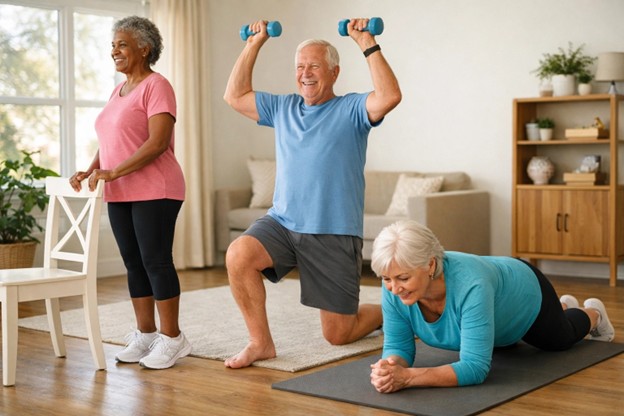
Focus on form, not intensity. Do 1-2 circuits of the five exercises above, three times this week. Your goal is consistency, not perfection.
Week 3-4: Increase Intensity
Add a third circuit. Slow down your movements: spend 3 seconds lowering, 1 second lifting. This "time under tension" builds more muscle and brain-boosting benefits.
Beyond 30 Days: Progress and Adapt
Add light weights to squats and lunges. Increase repetitions. Try more challenging variations. Your body will tell you when it's ready for more.
Focus on form, not intensity. Do 1-2 circuits of the five exercises above, three times this week. Your goal is consistency, not perfection.
Week 3-4: Increase Intensity
Add a third circuit. Slow down your movements: spend 3 seconds lowering, 1 second lifting. This "time under tension" builds more muscle and brain-boosting benefits.
Beyond 30 Days: Progress and Adapt
Add light weights to squats and lunges. Increase repetitions. Try more challenging variations. Your body will tell you when it's ready for more.
And here's the most important part: track your progress. Write down how many reps you can do, how you feel afterward, and what daily activities are getting easier. This feedback loop keeps you motivated and proves that you're reversing age-related decline.
The Bottom Line: You Have More Control Than You Think
Building muscle after 60 isn't about vanity. It's about independence, confidence, and maintaining the sharp, capable mind you've spent a lifetime developing.
You don't have to accept decline as inevitable. You can look and feel 10-20 years younger in 90 days: not with miracle cures or expensive treatments, but with consistent, functional strength training that builds both body and brain.
I'm 83 and living proof. Your age is just a number. What matters is what you do about it.
Ready to reverse age-related decline and rediscover what your body can do? Start with my FREE resources and see exactly how functional fitness can transform your strength, balance, and mental clarity.
Be Bold. Never Be Old.
The best version of you is waiting. Let's build it together.
Book a free call with Rico to discuss your health and fitness challenges. You will receive some quick and easy solutions.
The Bottom Line: You Have More Control Than You Think
Building muscle after 60 isn't about vanity. It's about independence, confidence, and maintaining the sharp, capable mind you've spent a lifetime developing.
You don't have to accept decline as inevitable. You can look and feel 10-20 years younger in 90 days: not with miracle cures or expensive treatments, but with consistent, functional strength training that builds both body and brain.
I'm 83 and living proof. Your age is just a number. What matters is what you do about it.
Ready to reverse age-related decline and rediscover what your body can do? Start with my FREE resources and see exactly how functional fitness can transform your strength, balance, and mental clarity.
Be Bold. Never Be Old.
The best version of you is waiting. Let's build it together.
Book a free call with Rico to discuss your health and fitness challenges. You will receive some quick and easy solutions.
I'm 83 years old, and people tell me I look and fact like I'm a healthy 60. That's not luck, genetics, or some magic pill. It's functional fitness: and it's not just keeping my body strong. It's keeping my mind sharp, too.
Here's what most people don't realize: when you build muscle after 60, you're also building brain power. The same strength training that helps you climb stairs, carry groceries, and move with confidence is also protecting your memory, focus, and mental clarity.
You don't have to accept decline. You can reverse it. And I'm going to show you exactly how.
The Muscle-Brain Connection You Need to Know
Let's get one thing straight: your muscles and your brain are in constant communication. When you perform strength training exercises, your muscles release proteins called myokines that travel through your bloodstream straight to your brain. These proteins stimulate the growth of new brain cells, improve memory formation, and protect against cognitive decline.
Translation? Every time you do a squat, a push-up, or lift a weight, you're literally feeding your brain.
Research shows that strength training improves executive function: that's your ability to plan, focus, and make decisions. It enhances processing speed, which means you think faster and react quicker. And it boosts neuroplasticity, your brain's ability to adapt and learn new things.
This isn't theory. This is science-backed fact. And at 83, I'm living proof that it works.
Here's what most people don't realize: when you build muscle after 60, you're also building brain power. The same strength training that helps you climb stairs, carry groceries, and move with confidence is also protecting your memory, focus, and mental clarity.
You don't have to accept decline. You can reverse it. And I'm going to show you exactly how.
The Muscle-Brain Connection You Need to Know
Let's get one thing straight: your muscles and your brain are in constant communication. When you perform strength training exercises, your muscles release proteins called myokines that travel through your bloodstream straight to your brain. These proteins stimulate the growth of new brain cells, improve memory formation, and protect against cognitive decline.
Translation? Every time you do a squat, a push-up, or lift a weight, you're literally feeding your brain.
Research shows that strength training improves executive function: that's your ability to plan, focus, and make decisions. It enhances processing speed, which means you think faster and react quicker. And it boosts neuroplasticity, your brain's ability to adapt and learn new things.
This isn't theory. This is science-backed fact. And at 83, I'm living proof that it works.
Why Strength Training After 60 Is Non-Negotiable
Most people over 60 have been told to "take it easy" or "be careful." That advice is stealing your independence.
Here's what actually happens when you avoid strength training:
Here's what actually happens when you avoid strength training:
- You lose 3-5% of your muscle mass every decade after 30
- Your bones become weaker and more prone to fractures
- Your balance deteriorates, increasing fall risk
- Your metabolism slows down, making weight management harder
- Your cognitive function declines faster
But here's the exciting part: You can reverse all of this with the right approach to strength training for seniors. It doesn't matter if you haven't exercised in years. Your body is ready to respond: right now, today.
The Functional Fitness Formula: Build Muscle, Boost Brain Power
Forget the complicated gym routines and fancy machines. How to build muscle after 60 comes down to functional movements: exercises that mirror real-life activities and train multiple muscle groups at once.
This approach doesn't just build strength. It builds the kind of strength you can actually use in daily life. And that's what keeps you independent, confident, and sharp.
The Core Exercises That Change Everything
Chair Squats (or Air Squats)
This is the foundation. Every time you stand up from a chair, get off the toilet, or climb out of a car, you're doing a squat pattern. Training this movement keeps you independent.
Start with 10 slow, controlled repetitions. If you need support, use a chair: sit down completely, then stand up using your leg strength (not momentum). As you get stronger, you'll do these without touching the chair at all.
Wall Push-Ups
Upper body strength isn't optional. You need it to push yourself up from bed, open heavy doors, and catch yourself if you stumble.
Stand arm's length from a wall with your hands at shoulder height. Bend your elbows to bring your chest toward the wall, then push back. Do 10 repetitions. This engages your chest, shoulders, arms, and core.
Forget the complicated gym routines and fancy machines. How to build muscle after 60 comes down to functional movements: exercises that mirror real-life activities and train multiple muscle groups at once.
This approach doesn't just build strength. It builds the kind of strength you can actually use in daily life. And that's what keeps you independent, confident, and sharp.
The Core Exercises That Change Everything
Chair Squats (or Air Squats)
This is the foundation. Every time you stand up from a chair, get off the toilet, or climb out of a car, you're doing a squat pattern. Training this movement keeps you independent.
Start with 10 slow, controlled repetitions. If you need support, use a chair: sit down completely, then stand up using your leg strength (not momentum). As you get stronger, you'll do these without touching the chair at all.
Wall Push-Ups
Upper body strength isn't optional. You need it to push yourself up from bed, open heavy doors, and catch yourself if you stumble.
Stand arm's length from a wall with your hands at shoulder height. Bend your elbows to bring your chest toward the wall, then push back. Do 10 repetitions. This engages your chest, shoulders, arms, and core.
Reverse Lunges
Balance and leg strength in one movement. Step one foot back, bend both knees to 90 degrees, then push through your front heel to return to standing. This builds your glutes, hamstrings, and quads while improving coordination.
Do 5 repetitions per leg. Hold onto a wall or counter if needed: there's no shame in safety.
Overhead Press
Grab light weights (or water bottles if you're just starting). Raise them to shoulder height, then press overhead.
Balance and leg strength in one movement. Step one foot back, bend both knees to 90 degrees, then push through your front heel to return to standing. This builds your glutes, hamstrings, and quads while improving coordination.
Do 5 repetitions per leg. Hold onto a wall or counter if needed: there's no shame in safety.
Overhead Press
Grab light weights (or water bottles if you're just starting). Raise them to shoulder height, then press overhead.
Start with 10 repetitions. You'll feel this in your shoulders, core, and even your legs as they stabilize you.
Calf Raises
Stand with feet hip-width apart and lift your heels off the ground. Hold a wall or chair for support. This simple exercise strengthens your calves and improves ankle stability: critical for preventing falls.
Do 10-15 repetitions. Feel the burn? That's your body getting stronger.
Your Simple Training Structure
Perform 10 repetitions of each exercise (or 5 per leg for lunges). Rest 30 seconds between exercises. Complete the entire circuit 2-3 times.
That's it. Five exercises. 10-15 minutes total.
Do this routine 3-4 times per week, and you'll see measurable improvements in 30 days. Better strength, better balance, sharper mind.
Calf Raises
Stand with feet hip-width apart and lift your heels off the ground. Hold a wall or chair for support. This simple exercise strengthens your calves and improves ankle stability: critical for preventing falls.
Do 10-15 repetitions. Feel the burn? That's your body getting stronger.
Your Simple Training Structure
Perform 10 repetitions of each exercise (or 5 per leg for lunges). Rest 30 seconds between exercises. Complete the entire circuit 2-3 times.
That's it. Five exercises. 10-15 minutes total.
Do this routine 3-4 times per week, and you'll see measurable improvements in 30 days. Better strength, better balance, sharper mind.
The Cognitive Benefits You'll Actually Feel
Let's talk about what happens to your brain when you commit to strength training for seniors:
Improved Memory
You'll remember names easier. You'll recall where you put your keys. You'll retain information from conversations without struggling. That's the increased blood flow to your brain at work: delivering oxygen and nutrients that support memory formation.
Faster Processing Speed
Your reaction time improves. You make decisions quicker. You feel more mentally agile. This is your brain building new neural pathways and strengthening existing ones.
Better Mood and Energy
Strength training releases endorphins: your brain's natural mood boosters. You'll feel more optimistic, more energized, and more capable of handling stress. Depression and anxiety decrease. Confidence increases.
Enhanced Focus and Concentration
You'll find it easier to stay on task, complete projects, and engage in activities that require sustained attention. Your executive function: the part of your brain that manages planning and decision-making: gets stronger with every workout.
Protection Against Dementia
This is the big one. Regular strength training reduces your risk of cognitive decline and dementia by up to 50%. You're literally building a protective shield around your brain health.
The Ageless Living Approach: Real-World Strength for Real Life
Here's my philosophy: Exercise isn't the goal. Living well is.
When I work with clients through my coaching program, we focus on functional fitness that translates directly into daily life.
You're not training to look good in a gym mirror (although that's a nice bonus).
You're training to:
- Get up from the floor easily
- Walk with confidence and stability
- Carry your grandkids without hurting your back
- Travel without fear of injury
- Move through life pain-free with confidence
That's age reversal. That's taking back control of your body and your future.
I'm 83, and I train for real life every day. I move like someone decades younger because I've been consistent with functional fitness. And every single one of my clients can do the same thing: regardless of their starting point.
Improved Memory
You'll remember names easier. You'll recall where you put your keys. You'll retain information from conversations without struggling. That's the increased blood flow to your brain at work: delivering oxygen and nutrients that support memory formation.
Faster Processing Speed
Your reaction time improves. You make decisions quicker. You feel more mentally agile. This is your brain building new neural pathways and strengthening existing ones.
Better Mood and Energy
Strength training releases endorphins: your brain's natural mood boosters. You'll feel more optimistic, more energized, and more capable of handling stress. Depression and anxiety decrease. Confidence increases.
Enhanced Focus and Concentration
You'll find it easier to stay on task, complete projects, and engage in activities that require sustained attention. Your executive function: the part of your brain that manages planning and decision-making: gets stronger with every workout.
Protection Against Dementia
This is the big one. Regular strength training reduces your risk of cognitive decline and dementia by up to 50%. You're literally building a protective shield around your brain health.
The Ageless Living Approach: Real-World Strength for Real Life
Here's my philosophy: Exercise isn't the goal. Living well is.
When I work with clients through my coaching program, we focus on functional fitness that translates directly into daily life.
You're not training to look good in a gym mirror (although that's a nice bonus).
You're training to:
- Get up from the floor easily
- Walk with confidence and stability
- Carry your grandkids without hurting your back
- Travel without fear of injury
- Move through life pain-free with confidence
That's age reversal. That's taking back control of your body and your future.
I'm 83, and I train for real life every day. I move like someone decades younger because I've been consistent with functional fitness. And every single one of my clients can do the same thing: regardless of their starting point.
Getting Started: Your First 30 Days
Week 1-2: Build the Habit
Focus on form, not intensity. Do 1-2 circuits of the five exercises above, three times this week. Your goal is consistency, not perfection.
Week 3-4: Increase Intensity
Add a third circuit. Slow down your movements: spend 3 seconds lowering, 1 second lifting. This "time under tension" builds more muscle and brain-boosting benefits.
Beyond 30 Days: Progress and Adapt
Add light weights to squats and lunges. Increase repetitions. Try more challenging variations. Your body will tell you when it's ready for more.
And here's the most important part: track your progress. Write down how many reps you can do, how you feel afterward, and what daily activities are getting easier. This feedback loop keeps you motivated and proves that you're reversing age-related decline.
The Bottom Line: You Have More Control Than You Think
Building muscle after 60 isn't about vanity. It's about independence, confidence, and maintaining the sharp, capable mind you've spent a lifetime developing.
You don't have to accept decline as inevitable. You can look and feel 10-20 years younger in 90 days: not with miracle cures or expensive treatments, but with consistent, functional strength training that builds both body and brain.
I'm 83 and living proof. Your age is just a number. What matters is what you do about it.
Ready to reverse age-related decline and rediscover what your body can do? Start with my FREE resources and see exactly how functional fitness can transform your strength, balance, and mental clarity.
Be Bold. Never Be Old.
The best version of you is waiting. Let's build it together.
Book a free call with Rico to discuss your health and fitness challenges. You will receive some quick and easy solutions.
Focus on form, not intensity. Do 1-2 circuits of the five exercises above, three times this week. Your goal is consistency, not perfection.
Week 3-4: Increase Intensity
Add a third circuit. Slow down your movements: spend 3 seconds lowering, 1 second lifting. This "time under tension" builds more muscle and brain-boosting benefits.
Beyond 30 Days: Progress and Adapt
Add light weights to squats and lunges. Increase repetitions. Try more challenging variations. Your body will tell you when it's ready for more.
And here's the most important part: track your progress. Write down how many reps you can do, how you feel afterward, and what daily activities are getting easier. This feedback loop keeps you motivated and proves that you're reversing age-related decline.
The Bottom Line: You Have More Control Than You Think
Building muscle after 60 isn't about vanity. It's about independence, confidence, and maintaining the sharp, capable mind you've spent a lifetime developing.
You don't have to accept decline as inevitable. You can look and feel 10-20 years younger in 90 days: not with miracle cures or expensive treatments, but with consistent, functional strength training that builds both body and brain.
I'm 83 and living proof. Your age is just a number. What matters is what you do about it.
Ready to reverse age-related decline and rediscover what your body can do? Start with my FREE resources and see exactly how functional fitness can transform your strength, balance, and mental clarity.
Be Bold. Never Be Old.
The best version of you is waiting. Let's build it together.
Book a free call with Rico to discuss your health and fitness challenges. You will receive some quick and easy solutions.
I'm 83 years old, and people tell me I look and fact like I'm a healthy 60. That's not luck, genetics, or some magic pill. It's functional fitness: and it's not just keeping my body strong. It's keeping my mind sharp, too.
Here's what most people don't realize: when you build muscle after 60, you're also building brain power. The same strength training that helps you climb stairs, carry groceries, and move with confidence is also protecting your memory, focus, and mental clarity.
You don't have to accept decline. You can reverse it. And I'm going to show you exactly how.
The Muscle-Brain Connection You Need to Know
Let's get one thing straight: your muscles and your brain are in constant communication. When you perform strength training exercises, your muscles release proteins called myokines that travel through your bloodstream straight to your brain. These proteins stimulate the growth of new brain cells, improve memory formation, and protect against cognitive decline.
Translation? Every time you do a squat, a push-up, or lift a weight, you're literally feeding your brain.
Research shows that strength training improves executive function: that's your ability to plan, focus, and make decisions. It enhances processing speed, which means you think faster and react quicker. And it boosts neuroplasticity, your brain's ability to adapt and learn new things.
This isn't theory. This is science-backed fact. And at 83, I'm living proof that it works.
Here's what most people don't realize: when you build muscle after 60, you're also building brain power. The same strength training that helps you climb stairs, carry groceries, and move with confidence is also protecting your memory, focus, and mental clarity.
You don't have to accept decline. You can reverse it. And I'm going to show you exactly how.
The Muscle-Brain Connection You Need to Know
Let's get one thing straight: your muscles and your brain are in constant communication. When you perform strength training exercises, your muscles release proteins called myokines that travel through your bloodstream straight to your brain. These proteins stimulate the growth of new brain cells, improve memory formation, and protect against cognitive decline.
Translation? Every time you do a squat, a push-up, or lift a weight, you're literally feeding your brain.
Research shows that strength training improves executive function: that's your ability to plan, focus, and make decisions. It enhances processing speed, which means you think faster and react quicker. And it boosts neuroplasticity, your brain's ability to adapt and learn new things.
This isn't theory. This is science-backed fact. And at 83, I'm living proof that it works.
Why Strength Training After 60 Is Non-Negotiable
Most people over 60 have been told to "take it easy" or "be careful." That advice is stealing your independence.
Here's what actually happens when you avoid strength training:
But here's the exciting part: You can reverse all of this with the right approach to strength training for seniors. It doesn't matter if you haven't exercised in years. Your body is ready to respond: right now, today.
Here's what actually happens when you avoid strength training:
- You lose 3-5% of your muscle mass every decade after 30
- Your bones become weaker and more prone to fractures
- Your balance deteriorates, increasing fall risk
- Your metabolism slows down, making weight management harder
- Your cognitive function declines faster
But here's the exciting part: You can reverse all of this with the right approach to strength training for seniors. It doesn't matter if you haven't exercised in years. Your body is ready to respond: right now, today.
The Functional Fitness Formula: Build Muscle, Boost Brain Power
Forget the complicated gym routines and fancy machines. How to build muscle after 60 comes down to functional movements: exercises that mirror real-life activities and train multiple muscle groups at once.
This approach doesn't just build strength. It builds the kind of strength you can actually use in daily life. And that's what keeps you independent, confident, and sharp.
The Core Exercises That Change Everything
Chair Squats (or Air Squats)
This is the foundation. Every time you stand up from a chair, get off the toilet, or climb out of a car, you're doing a squat pattern. Training this movement keeps you independent.
Start with 10 slow, controlled repetitions. If you need support, use a chair: sit down completely, then stand up using your leg strength (not momentum). As you get stronger, you'll do these without touching the chair at all.
Wall Push-Ups
Upper body strength isn't optional. You need it to push yourself up from bed, open heavy doors, and catch yourself if you stumble.
Stand arm's length from a wall with your hands at shoulder height. Bend your elbows to bring your chest toward the wall, then push back. Do 10 repetitions. This engages your chest, shoulders, arms, and core.
Forget the complicated gym routines and fancy machines. How to build muscle after 60 comes down to functional movements: exercises that mirror real-life activities and train multiple muscle groups at once.
This approach doesn't just build strength. It builds the kind of strength you can actually use in daily life. And that's what keeps you independent, confident, and sharp.
The Core Exercises That Change Everything
Chair Squats (or Air Squats)
This is the foundation. Every time you stand up from a chair, get off the toilet, or climb out of a car, you're doing a squat pattern. Training this movement keeps you independent.
Start with 10 slow, controlled repetitions. If you need support, use a chair: sit down completely, then stand up using your leg strength (not momentum). As you get stronger, you'll do these without touching the chair at all.
Wall Push-Ups
Upper body strength isn't optional. You need it to push yourself up from bed, open heavy doors, and catch yourself if you stumble.
Stand arm's length from a wall with your hands at shoulder height. Bend your elbows to bring your chest toward the wall, then push back. Do 10 repetitions. This engages your chest, shoulders, arms, and core.
Reverse Lunges
Balance and leg strength in one movement. Step one foot back, bend both knees to 90 degrees, then push through your front heel to return to standing. This builds your glutes, hamstrings, and quads while improving coordination.
Do 5 repetitions per leg. Hold onto a wall or counter if needed: there's no shame in safety.
Overhead Press
Grab light weights (or water bottles if you're just starting). Raise them to shoulder height, then press overhead. This movement builds shoulder strength for reaching high shelves and lifting objects above your head.
Start with 10 repetitions. You'll feel this in your shoulders, core, and even your legs as they stabilize you.
Balance and leg strength in one movement. Step one foot back, bend both knees to 90 degrees, then push through your front heel to return to standing. This builds your glutes, hamstrings, and quads while improving coordination.
Do 5 repetitions per leg. Hold onto a wall or counter if needed: there's no shame in safety.
Overhead Press
Grab light weights (or water bottles if you're just starting). Raise them to shoulder height, then press overhead. This movement builds shoulder strength for reaching high shelves and lifting objects above your head.
Start with 10 repetitions. You'll feel this in your shoulders, core, and even your legs as they stabilize you.
Calf Raises
Stand with feet hip-width apart and lift your heels off the ground. Hold a wall or chair for support. This simple exercise strengthens your calves and improves ankle stability: critical for preventing falls.
Do 10-15 repetitions. Feel the burn? That's your body getting stronger.
Your Simple Training Structure
Perform 10 repetitions of each exercise (or 5 per leg for lunges). Rest 30 seconds between exercises. Complete the entire circuit 2-3 times.
That's it. Five exercises. 10-15 minutes total.
Do this routine 3-4 times per week, and you'll see measurable improvements in 30 days. Better strength, better balance, sharper mind.
Stand with feet hip-width apart and lift your heels off the ground. Hold a wall or chair for support. This simple exercise strengthens your calves and improves ankle stability: critical for preventing falls.
Do 10-15 repetitions. Feel the burn? That's your body getting stronger.
Your Simple Training Structure
Perform 10 repetitions of each exercise (or 5 per leg for lunges). Rest 30 seconds between exercises. Complete the entire circuit 2-3 times.
That's it. Five exercises. 10-15 minutes total.
Do this routine 3-4 times per week, and you'll see measurable improvements in 30 days. Better strength, better balance, sharper mind.
The Cognitive Benefits You'll Actually Feel
Let's talk about what happens to your brain when you commit to strength training for seniors:
Improved Memory
You'll remember names easier. You'll recall where you put your keys. You'll retain information from conversations without struggling. That's the increased blood flow to your brain at work: delivering oxygen and nutrients that support memory formation.
Faster Processing Speed
Your reaction time improves. You make decisions quicker. You feel more mentally agile. This is your brain building new neural pathways and strengthening existing ones.
Improved Memory
You'll remember names easier. You'll recall where you put your keys. You'll retain information from conversations without struggling. That's the increased blood flow to your brain at work: delivering oxygen and nutrients that support memory formation.
Faster Processing Speed
Your reaction time improves. You make decisions quicker. You feel more mentally agile. This is your brain building new neural pathways and strengthening existing ones.
Better Mood and Energy
Strength training releases endorphins: your brain's natural mood boosters. You'll feel more optimistic, more energized, and more capable of handling stress. Depression and anxiety decrease. Confidence increases.
Enhanced Focus and Concentration
You'll find it easier to stay on task, complete projects, and engage in activities that require sustained attention. Your executive function: the part of your brain that manages planning and decision-making: gets stronger with every workout.
Protection Against Dementia
This is the big one. Regular strength training reduces your risk of cognitive decline and dementia by up to 50%. You're literally building a protective shield around your brain health.
The Ageless Living Approach: Real-World Strength for Real Life
Here's my philosophy: Exercise isn't the goal. Living well is.
When I work with clients through my coaching program, we focus on functional fitness that translates directly into daily life.
You're not training to look good in a gym mirror (although that's a nice bonus).
You're training to:
- Get up from the floor easily
- Walk with confidence and stability
- Carry your grandkids without hurting your back
- Travel without fear of injury
- Move through life pain-free with confidence
That's age reversal. That's taking back control of your body and your future.
I'm 83, and I train for real life every day. I move like someone decades younger because I've been consistent with functional fitness. And every single one of my clients can do the same thing: regardless of their starting point.
Strength training releases endorphins: your brain's natural mood boosters. You'll feel more optimistic, more energized, and more capable of handling stress. Depression and anxiety decrease. Confidence increases.
Enhanced Focus and Concentration
You'll find it easier to stay on task, complete projects, and engage in activities that require sustained attention. Your executive function: the part of your brain that manages planning and decision-making: gets stronger with every workout.
Protection Against Dementia
This is the big one. Regular strength training reduces your risk of cognitive decline and dementia by up to 50%. You're literally building a protective shield around your brain health.
The Ageless Living Approach: Real-World Strength for Real Life
Here's my philosophy: Exercise isn't the goal. Living well is.
When I work with clients through my coaching program, we focus on functional fitness that translates directly into daily life.
You're not training to look good in a gym mirror (although that's a nice bonus).
You're training to:
- Get up from the floor easily
- Walk with confidence and stability
- Carry your grandkids without hurting your back
- Travel without fear of injury
- Move through life pain-free with confidence
That's age reversal. That's taking back control of your body and your future.
I'm 83, and I train for real life every day. I move like someone decades younger because I've been consistent with functional fitness. And every single one of my clients can do the same thing: regardless of their starting point.
Getting Started: Your First 30 Days
Week 1-2: Build the Habit
Focus on form, not intensity. Do 1-2 circuits of the five exercises above, three times this week. Your goal is consistency, not perfection.
Week 3-4: Increase Intensity
Add a third circuit. Slow down your movements: spend 3 seconds lowering, 1 second lifting. This "time under tension" builds more muscle and brain-boosting benefits.
Beyond 30 Days: Progress and Adapt
Add light weights to squats and lunges. Increase repetitions. Try more challenging variations. Your body will tell you when it's ready for more.
Focus on form, not intensity. Do 1-2 circuits of the five exercises above, three times this week. Your goal is consistency, not perfection.
Week 3-4: Increase Intensity
Add a third circuit. Slow down your movements: spend 3 seconds lowering, 1 second lifting. This "time under tension" builds more muscle and brain-boosting benefits.
Beyond 30 Days: Progress and Adapt
Add light weights to squats and lunges. Increase repetitions. Try more challenging variations. Your body will tell you when it's ready for more.
And here's the most important part: track your progress. Write down how many reps you can do, how you feel afterward, and what daily activities are getting easier. This feedback loop keeps you motivated and proves that you're reversing age-related decline.
The Bottom Line: You Have More Control Than You Think
Building muscle after 60 isn't about vanity. It's about independence, confidence, and maintaining the sharp, capable mind you've spent a lifetime developing.
You don't have to accept decline as inevitable. You can look and feel 10-20 years younger in 90 days: not with miracle cures or expensive treatments, but with consistent, functional strength training that builds both body and brain.
I'm 83 and living proof. Your age is just a number. What matters is what you do about it.
Ready to reverse age-related decline and rediscover what your body can do? Start with my FREE resources and see exactly how functional fitness can transform your strength, balance, and mental clarity.
Be Bold. Never Be Old.
The best version of you is waiting. Let's build it together.
Book a free call with Rico to discuss your health and fitness challenges. You will receive some quick and easy solutions.
The Bottom Line: You Have More Control Than You Think
Building muscle after 60 isn't about vanity. It's about independence, confidence, and maintaining the sharp, capable mind you've spent a lifetime developing.
You don't have to accept decline as inevitable. You can look and feel 10-20 years younger in 90 days: not with miracle cures or expensive treatments, but with consistent, functional strength training that builds both body and brain.
I'm 83 and living proof. Your age is just a number. What matters is what you do about it.
Ready to reverse age-related decline and rediscover what your body can do? Start with my FREE resources and see exactly how functional fitness can transform your strength, balance, and mental clarity.
Be Bold. Never Be Old.
The best version of you is waiting. Let's build it together.
Book a free call with Rico to discuss your health and fitness challenges. You will receive some quick and easy solutions.
Most people over 60 have been told to "take it easy" or "be careful." That advice is stealing your independence.
Here's what actually happens when you avoid strength training:
• You lose 3-5% of your muscle mass every decade after 30
• Your bones become weaker and more prone to fractures
• Your balance deteriorates, increasing fall risk
• Your metabolism slows down, making weight management harder
• Your cognitive function declines faster
But here's the exciting part: You can reverse all of this with the right approach to strength training for seniors. It doesn't matter if you haven't exercised in years. Your body is ready to respond: right now, today.
Here's what actually happens when you avoid strength training:
• You lose 3-5% of your muscle mass every decade after 30
• Your bones become weaker and more prone to fractures
• Your balance deteriorates, increasing fall risk
• Your metabolism slows down, making weight management harder
• Your cognitive function declines faster
But here's the exciting part: You can reverse all of this with the right approach to strength training for seniors. It doesn't matter if you haven't exercised in years. Your body is ready to respond: right now, today.